

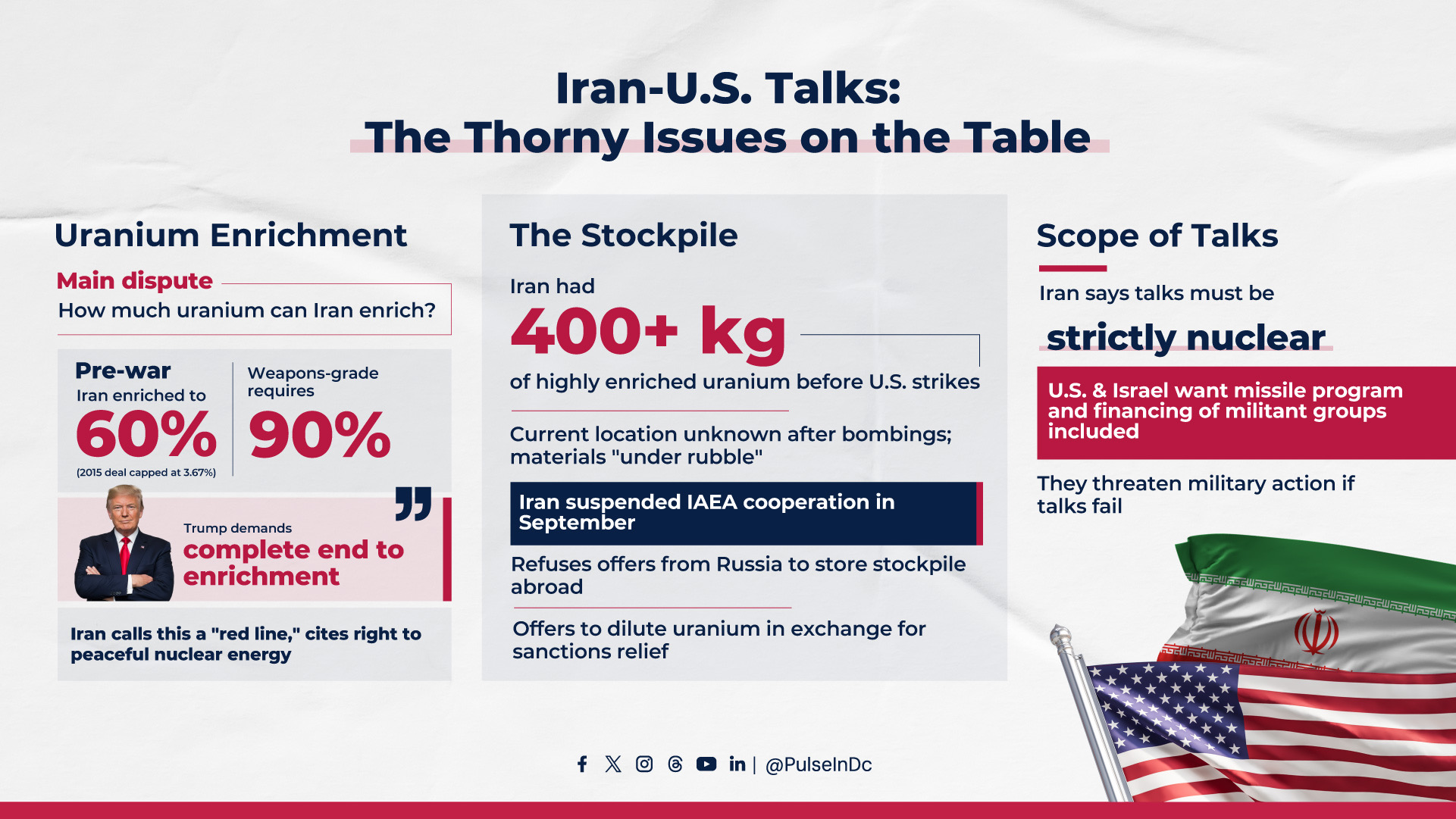
Iran-U.S. Talks: The Thorny Issues on the Table
Iran and the United States are holding high-stakes nuclear talks, but the two sides remain deeply divided over what should even be on the table.
Tehran insists negotiations must be strictly limited to its nuclear program and the lifting of sanctions, while Washington demands a broader agenda that includes Iran’s ballistic missile program and its support for militant groups across the region.
The talks come after the Iran-Israel war last June derailed previous diplomacy, during which the U.S. bombed three Iranian nuclear sites—Fordow, Natanz, and Isfahan—with Trump later claiming the strikes “obliterated” the program.
Before the war, Iran was enriching uranium to 60%, far above the 3.67% cap of the 2015 nuclear deal from which Trump withdrew in 2018.
The location of Iran’s 400+ kilogram stockpile of highly enriched uranium remains unclear, with an adviser to Iran’s supreme leader stating the materials are “under the rubble” and too dangerous to extract.
Iran has offered to dilute its uranium in exchange for sanctions relief but refuses to expand talks beyond nuclear issues, setting the stage for a diplomatic showdown that could determine whether negotiations succeed or military action resumes.