

How the Hormuz Strait Crisis Threatens Global Food Security
The escalating U.S.-Israel war with Iran has triggered a severe disruption in global fertilizer markets, posing a direct threat to international food security.
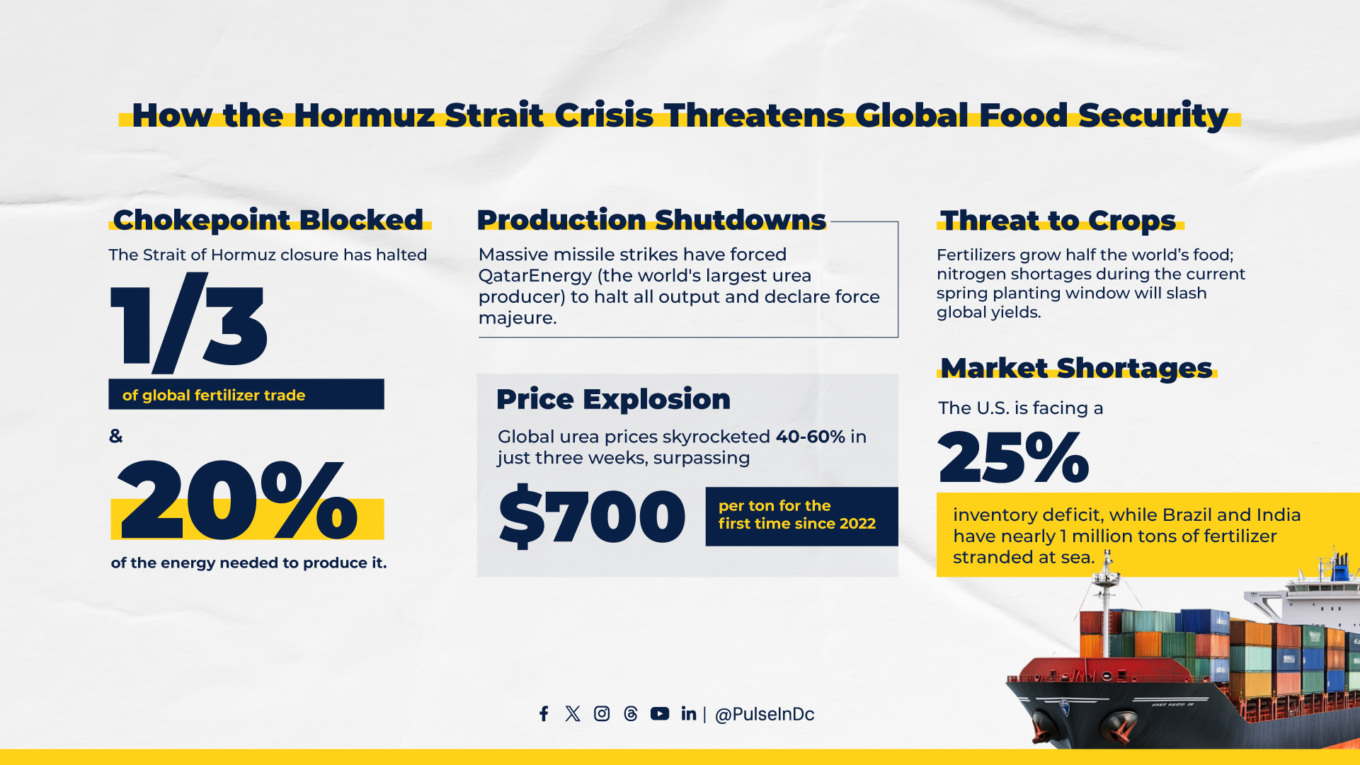
As the Strait of Hormuz remains effectively closed, one-third of the world’s fertilizer trade—which is highly dependent on regional natural gas for production—has been paralyzed.
Major production hubs, including Qatar’s world-leading urea plant, have halted operations due to energy shortages and security risks.
This supply shock is hitting farmers in the Northern Hemisphere right as the critical spring planting season begins.
With Middle Eastern urea prices surging 40% to over $700 per metric ton and U.S. domestic supplies dropping 25% below seasonal averages, analysts warn that prolonged shortages of nitrogen-based fertilizers could slash global crop yields by half, disproportionately impacting developing nations already struggling with food inflation.